St Peters Lodge, Priory Road, Spalding PE11 2XA
Our curriculum
Here at Munchkins Kindergarten, we follow the Early Years Foundation Stage (EYFS) statutory framework. Our curriculum is designed to support every child to develop, learn and thrive in a safe, nurturing, stimulating and language rich environment.
Four key themes
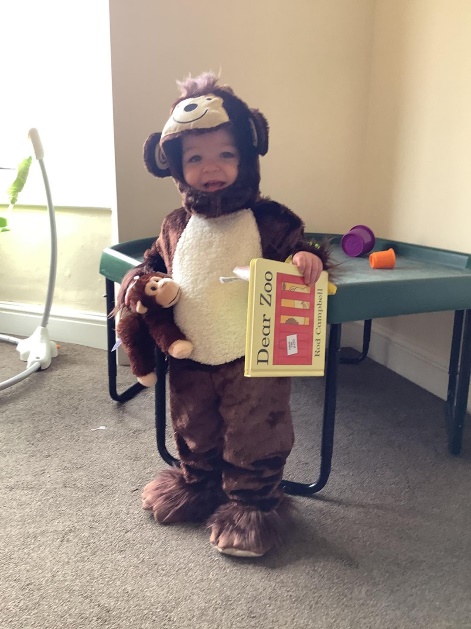
Our curriculum supports children to become confident, independent, and curious learners through play-based, meaningful experiences, and to ensure they have ‘Readiness’ for every stage of learning, both now and in the future. The EYFS is underpinned by four key themes, which shape our practice at Munchkins:
Every child is constantly learning and can be resilient, capable, confident and self-assured.
Children learn to be strong and independent through warm, loving relationships.
Children learn and develop well in environments where their experiences respond to their individual needs.
Children develop and learn at different rates.
We recognise every child is unique, capable, and develops at their own pace. Our approach ensures that learning is inclusive, engaging, and tailored to each child’s interests and needs, preparing them for the next stage of their education and life beyond nursery.
Seven areas of learning
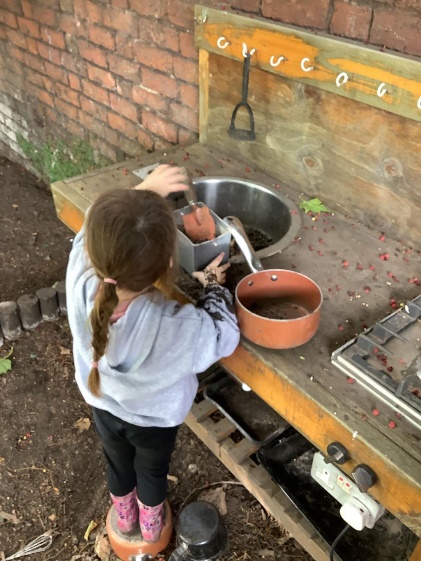
The EYFS Curriculum consists of seven areas of learning and development, divided into:
These areas are embedded throughout the nursery day. The curriculum is delivered through:
How children learn
At Munchkins, teaching and learning centres around the individual child—what they love, what motivates them, and how they learn best. Our approach is guided by the Characteristics of Effective Learning:
Children investigate and experience things.
Children concentrate, persist, and enjoy achievements.
Children develop their own ideas and make connections.
Children are encouraged to make choices and decisions about the activities they take part in throughout the day, supporting independence and confidence.
Our approach to teaching is centred on the delivery of rich, engaging, and meaningful activities, combined with purposeful play and high-quality teachable moments. This creates valuable opportunities for children’s natural curiosity to be enhanced and to provide appropriate challenge to extend individual learning and use ongoing observation and assessment to plan meaningful next steps.
We are committed to creating inclusive opportunities for all children, ensuring that every child feels supported and valued.
Enrichment & partnership
Alongside our core curriculum, children take part in a range of enrichment programmes designed to further enhance their development. These include, Yoga, Makaton, Good Movement, phonological awareness sessions and more. These experiences provide additional opportunities for children to develop physically, socially, and emotionally.
We believe strong partnerships with parents are key to children’s success. We share regular updates on your child’s progress, encourage learning at home, and value parent contributions to children’s development.
Our curriculum in practice
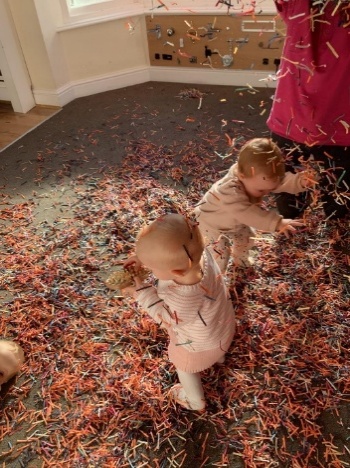
In our baby room, learning is centred around nurturing relationships, sensory exploration, and early development through play and interaction. We provide a calm, responsive environment where babies feel safe to explore and begin to understand the world around them. We have a high focus on the 3 Prime areas of learning.
We support early communication through singing, talking, and responding sensitively to babies sounds, gestures, and facial expressions. Practitioners model language consistently, helping babies begin to understand words, tone, and meaning. Home languages are supported and celebrated throughout our entire curriculum.
Babies are encouraged to explore movement through tummy time, rolling, crawling, early walking skills, and balance. We provide a range of sensory and physical experiences to strengthen both gross and fine motor skills, including grasping, reaching, and manipulating objects.
Strong, secure attachments are built through consistent, responsive care. Babies are supported to feel safe, valued, and confident, helping them begin to develop trust and a sense of self. Babies learn a sense of self and to manage themselves by co-regulation with trusted adults, communicating needs both non-verbally and verbally, and through participation in care routines.
We introduce books, songs, and rhymes daily to develop listening skills, attention, and an early enjoyment of stories and language.
Early mathematical concepts are explored through sensory play, such as filling and emptying containers, exploring size and shape, and noticing simple patterns and routines.
Babies explore their environment through sensory rich experiences, discovering textures, sounds, and familiar people, helping them begin to make sense of their surroundings.
Creative exploration is encouraged through music, movement, and sensory materials such as paint, water, and textured objects, allowing babies to express themselves freely.
In our toddler room, children are supported to develop independence, language, and social skills through active exploration and play. We encourage curiosity and provide opportunities for children to begin making choices and expressing their ideas.
We encourage children to express themselves through conversation, storytelling, songs, and role play. Practitioners extend vocabulary and support understanding by modelling language and asking open-ended questions to extend their thinking.
Toddlers develop coordination and confidence through climbing, running, balancing, and fine motor activities such as mark-making, threading, and using simple tools.
Children begin to build friendships, learn to share and take turns, and develop confidence in making choices. We support them in recognising and managing their emotions in a safe and secure environment. We support children to understand self-care needs such as washing hands, brushing teeth and toileting.
We introduce early phonological awareness through fun, engaging activities, encourage mark-making in a variety of forms, and share a wide range of stories and printed material regularly to build a love of reading and understanding of print.
Children explore counting, sorting, matching, and simple problem-solving through everyday play, helping them begin to understand numbers, patterns, and relationships.
Toddlers learn about their environment, daily routines, and the people around them. They begin to explore differences, celebrations, and cultures, developing awareness of the wider world.
Imaginative play, music, dance, and creative activities allow children to express their ideas and emotions, explore different materials, and develop their creativity.
In our preschool room, children are supported to build confidence, independence, and the skills needed for school readiness. Learning becomes more structured while still being play-based and led by children’s interests.
Children develop strong speaking and listening skills through discussions, storytelling, group activities, and role play. They are encouraged to express their thoughts clearly and listen to others. Children build a wide vocabulary modelled by staff to prompt their thinking and understanding
We support coordination, control, and strength through both structured and free play. Activities include outdoor play, fine motor tasks, and writing readiness exercises such as disco dough to prepare those early writing skills. Children learn to manage their own physical needs such as toileting, dressing, personal hygiene and eating/nutrition.
Children build resilience, independence, and positive relationships. They learn to manage their emotions, work collaboratively, and develop confidence in new situations, preparing them for school. Children are supported to have a strong sense of self and culture, understand their needs, wants and boundaries as well as those of others.
We build on phonological awareness and early phonics skills, early reading, and writing skills. Children are encouraged to recognise letters, sounds, syllables and rhymes, and develop confidence in mark-making and pencil control.
Children develop number recognition, counting, and problem-solving skills. They explore shapes, patterns, measures, and begin to apply mathematical thinking in everyday situations.
Children explore the wider world, including communities, nature, and technology. They develop curiosity, ask questions, and begin to understand similarities and differences.
Creativity is encouraged through art, music, dance, and imaginative role play. Children are supported to explore their ideas, experiment with materials, and express themselves with confidence.
Come and say hello
The best way to get a feel for Munchkins is to come and see us. Call, email or send us a message and we’ll arrange a time to show you around.
Fill in the form below and we will be in touch soon.